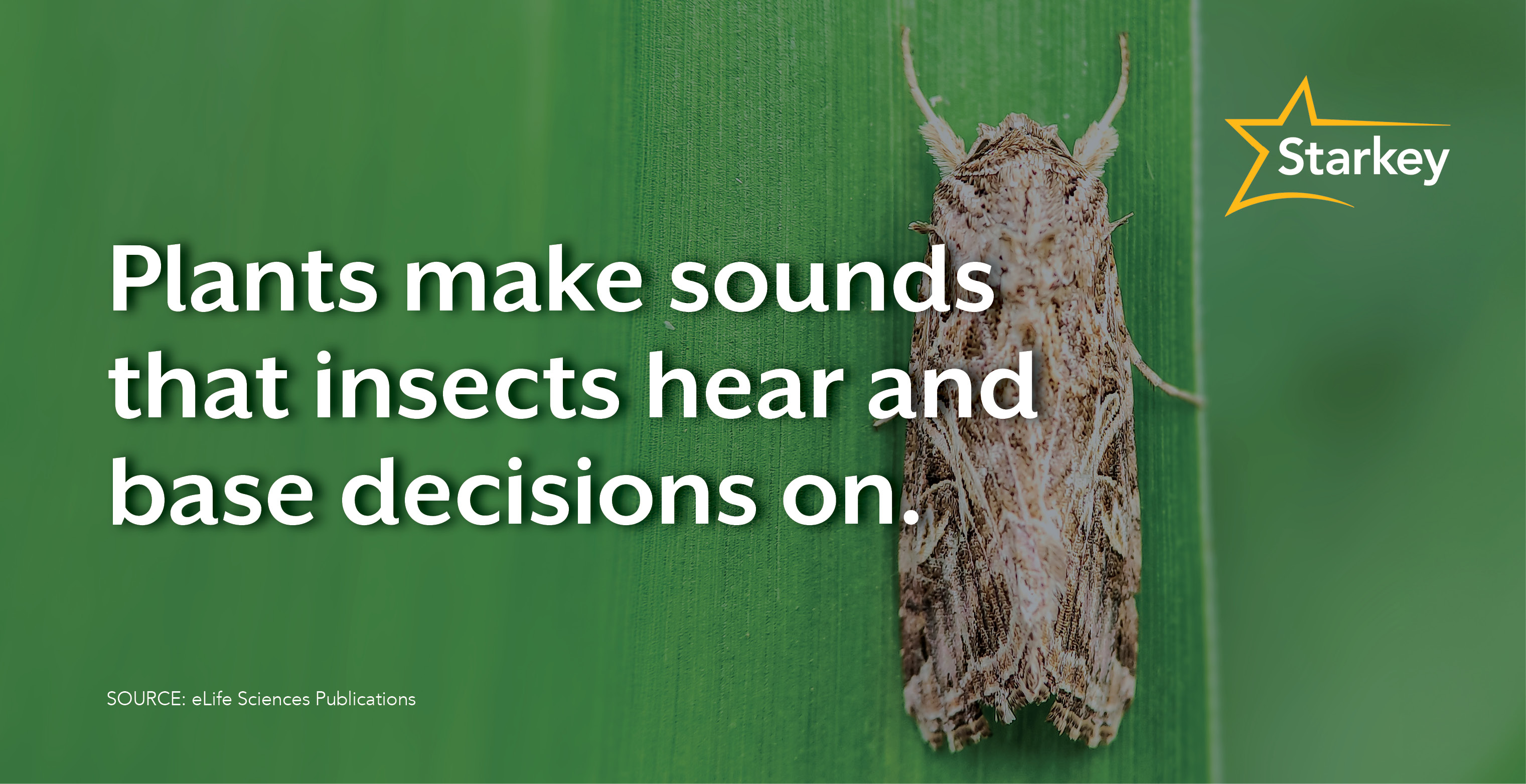
Happy spring! We begin this blog with a shout-out to those who make the effort to water their plants regularly: Because did you know that dehydration not only stresses plants, but makes them scream? Yes, you heard that right.
This is the sound of plants vibrating at ultrasonic frequencies “due to physiological processes” that occur from changes in water pressure—if a plant is cut or dehydrated, for example.
If you haven’t heard these ultrasonic frequencies yourself, you’re not alone—the frequency of these sounds is too high for humans to hear. But if you’re an insect, you can, as past research has proven. (Not a huge help to the plant when they’re thirsty, but at least someone’s listening?)
And now, as today’s hearing fact shows, hearing these sounds can cause insects to react; affecting the decisions they make. It’s the first acoustic interaction between insects and plants that has been uncovered, suggesting there are even more out there, just waiting to be discovered.
Let’s welcome the start of our vibrant vernal equinox by exploring this hearing fact and the fascinating way it came to be.
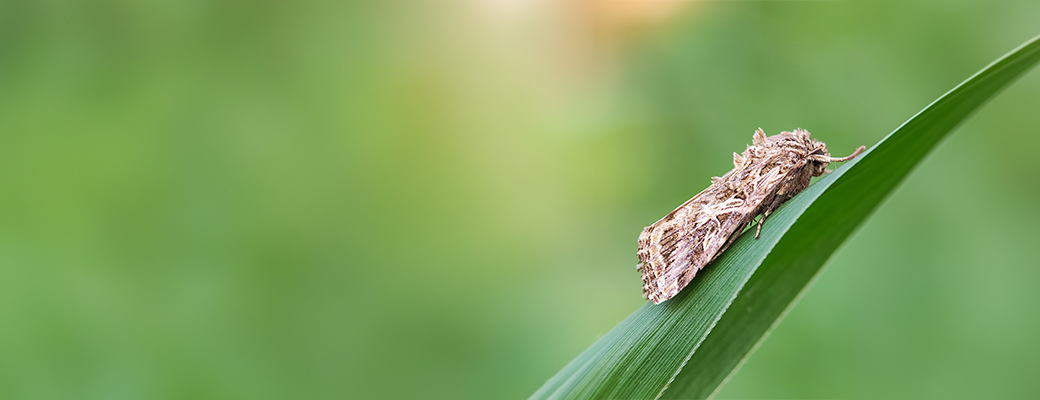
Study explored whether moths relied on plant sounds to make choices
The study was conducted by researchers from Tel Aviv University who wanted to find out if insects depend on plants’ acoustic signals when making decisions.
Experimenting with female Egyptian cotton leafworm moths, they observed the insects to see if hearing the ultrasonic sounds from dehydrated plants affected whether they chose to lay eggs on the plant, with the intention of their larvae feeding upon the plant after hatching.
While the scientists knew from previous trials that the moths appeared to gravitate toward fresh versus dehydrated plants for egg-laying, they wanted to see if sound also played a role.
In arguably the most telling experiment, the researchers presented the female moths with two tomato plants—both of which were hydrated. But near one of the plants was a speaker playing distressed ultrasonic sounds.
The result: More moths selected the quieter plant.
“We’ve known for a long time that plants give off smells when they’re in trouble, like when they’re being eaten by bugs or are thirsty. These smells help attract helpful insects or scare away pests,” lead study author Rya Seltzer, an entomologist and doctoral student in zoology at Tel Aviv University, told CNN. “What’s new here is that sound may give extra information—like a warning signal—especially when there’s no smell or the smell is hard to detect.”
Seltzer went on to explain that plant acoustics was a progressing area of research, and that there may be future investigations into the use of acoustic monitoring to identify how stress affects plant health and potential applications for agricultural pest control.

Better hearing ensures we don’t miss life’s important sounds
The study behind today’s hearing fact goes to show that, not only are moths cooler than we thought (what’s neater than supersonic hearing, right?), but also the significance of being able to hear those important sounds in life that inform us, caution us, or even direct us to a moment we don’t want to miss out on.
Whether it’s the splashes of a rippling creek leading us to a peaceful location, the buzz of an oven timer telling us our cookies are finished baking, or the chatter of our favorite little one telling us they’re ready to show us their dance routine—the better we can hear, the easier, safer, and more fulfilling our lives can be.
So, if you’re thinking of treating your hearing loss, why not give yourself a fresh start on better hearing and living this spring—the restart of nature’s symphony, more outdoor activities, and unmissable moments from graduations to family barbecues—and schedule an appointment with a hearing care professional.
Don’t have one yet? No problem. Simply type your zip code in here and you’ll find a list of local providers who can evaluate your hearing, consult with you about your options, and even demo our latest hearing aid technology.