When we think about celebrities and the integral part they play in our culture and the enjoyment we experience through entertainment, it’s sometimes hard to imagine them undergoing the same human challenges we do. But of course, as fellow humans, they do—and that includes hearing loss.
From stars of the silver screen to the makers of the music we’ll always have an ear for, many celebrities are living with hearing loss today: People from Kevin Costner, Geena Davis, and Huey Lewis, to Alice Cooper, Mike Love, and others are not only coming to Starkey to improve their hearing—but also using their platforms to raise awareness of hearing loss and the transformative effect that hearing aids can have on both hearing and living.
Here are three well-known celebrities who sat down with Starkey to discuss their hearing journeys—from the moments they knew they needed treatment for hearing loss, to the newfound joys they’re experiencing through Starkey hearing innovation.
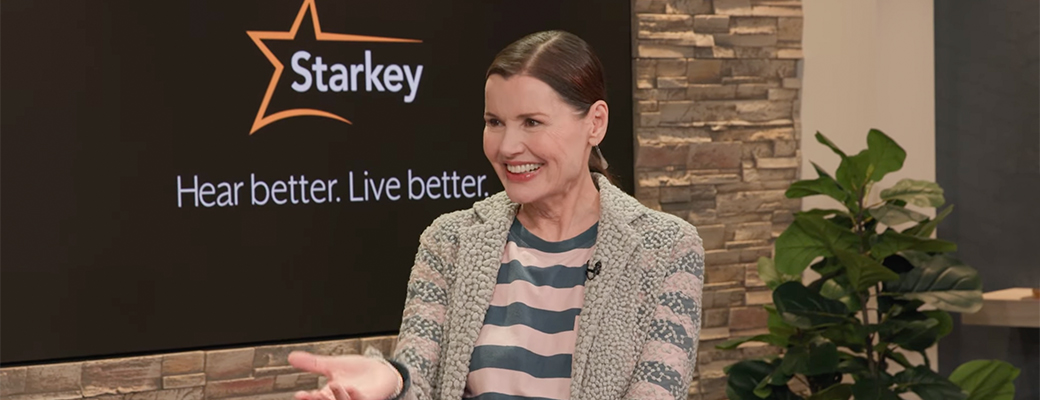
Geena Davis
Much like the very human, relatable characters she has portrayed, Geena Davis’s journey to better hearing is one many of us can connect with. The Academy Award-winning actor and activist told Starkey that she knew she had some hearing loss for about 20 years but had not yet gotten to the stage (pun intended) when she wanted to do something about it.
That turning point happened on set, Davis recalled. “I just was filming a new TV show, and I noticed while we were filming that I was having a harder time [hearing] if someone was speaking quietly or under their breath...or turning away.”
She continued, “I hadn't realized how much I rely on reading lips…that I have to be facing the person.”
Davis had also felt the all-too-familiar frustration of her grown children when they had to repeat themselves for her.
“So, I thought, ‘Wow, when I'm off again, I want to do something about it,’” she said.
One fateful conversation with her close friend Sandy put the change in motion: Sandy personally recommended Starkey as a place where Davis could get hearing aids that were custom fitted plus spend time understanding her devices with professionals who would “really tune them.”
“So, I had this conversation with my friend Sandy, and I was like, ‘Let's do it.’”
Wearing hearing aids helped Davis realize what she had been missing. “I didn’t know I had been missing all the subtle sounds… [With voices] I felt like it wasn’t really a volume thing as much as sounding underwater. It sounded like people were mumbling…I wasn’t hearing the consonants.”
Amazed by her improved ability to hear voices and newfound confidence in noisy environments (“you can push a button, and it will dim the crowd noise”) through hearing technology, Davis is happy about her decision to treat her hearing loss with the help of Starkey.
“I’m very grateful,” she said.
Watch the full Coffee Talk podcast with Geena Davis, Starkey Vice Chair Tani Austin, and Chief People Officer and EVP of Culture Jessica Sawalich.
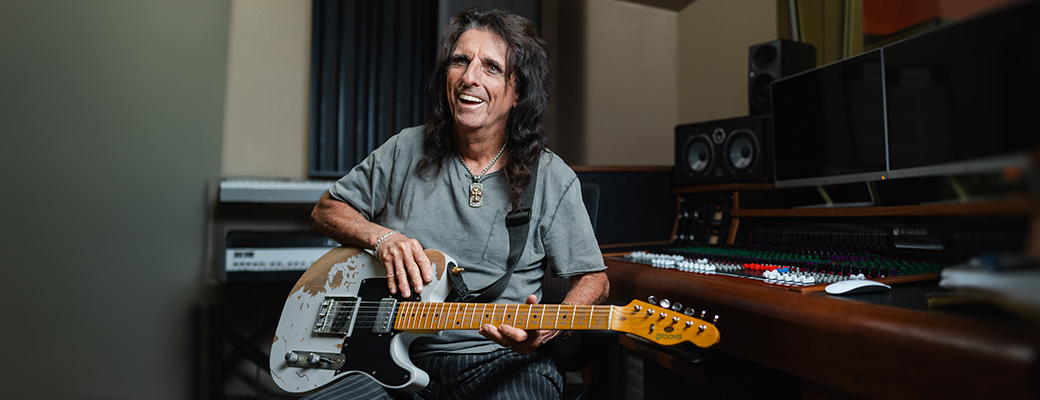
Alice Cooper
Welcome to his nightmare: Legendary Rock & Roll Hall of Famer Alice Cooper attributes his hearing loss to a lifetime of loud rock performances in which his ears went unprotected—an unfortunate reality for many professional musicians.
“We never took care of our hearing,” the “Godfather of Shock Rock” told Starkey. “Those great big [noise-protection headphones] you could put on if you were working in a factory? In rock and roll, you didn’t have that. You just turned the guitar up.”
He continued, “At this point now, I would say, anybody that's in the rock and roll business and is still around after 50 years—and there's a lot of bands that are out there—we all have hearing problems.”
Just over 15 years ago, however, the artist realized it didn’t have to be that way, for him.
“I'd be watching TV and I'm going, ‘I'm only picking up half of what they're saying.’ And I'd go, ‘Is everybody else having a problem with it?’ They go, ‘No.’ I go, ‘Wow, that's weird.’ But still, it didn't drive me to [see a hearing care professional]. I just knew that night I was going to be blasted by 10 million decibels. And so, you kind of give up.”
But it wasn’t long after that Cooper finally did get his hearing checked. “I found out how much hearing I had lost,” he said, “and then they put [a Starkey hearing aid] in, and I could hear perfectly again. And it was just like being reborn again with your ears.”
Cooper still records and performs live today with hearing aids in tow—or in the words of the musician, “clearing aids”—thanks to their capability to clear out the “fuzz” of hearing loss and focus in on what he wants to hear.
Watch the full Starkey Sound Bites podcast with Alice Cooper and Starkey Chief Hearing Health Officer Dave Fabry.
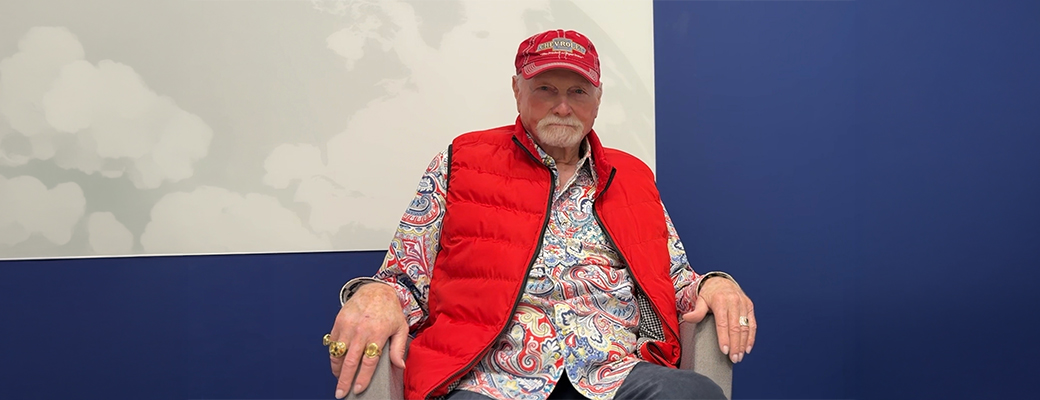
Mike Love
Like Cooper, Beach Boys lead vocalist Mike Love lived his passion of making Rock & Roll Hall of Fame-worthy music—but in turn had to “face the music” of his resulting hearing loss.
As the Grammy award-winner described to Starkey, “In the sixties, we had these wedges* and the guitars would play through them, and the drums would be back here…and the bass and keyboard and everything… It was so loud that I remember my ears ringing after the concert.”
At the time, Love turned to meditation to help manage his tinnitus, but eventually “there were certain ranges that were so beaten up by the sound level that I literally [could not] hear in certain ranges.”
Hearing difficulties also found their way into the performer’s everyday communication with loved ones, particularly his wife. “My wife Jacqueline is speaking to me, and I literally cannot hear [without hearing aids]. I can hear that she’s speaking to me, but I can’t hear the discrimination of the actual words. And that makes it very tough.”
Jacqueline, who also expressed concern about the impact of hearing loss on Love’s ability to hear key information and emergency sounds and participate in dinner conversations, eventually advised him to have his hearing evaluated.
That was 15 years ago. Love now enjoys better hearing through his Starkey hearing aids, which, unlike the previous technologies he tried, are highly customized for his hearing and molded for his individual ears.
“It's one thing to buy a set of hearing aids for a couple hundred bucks off the ad you saw on TV, but it's another to have them actually fit and have the technology that comes along with it,” he said. “It's a pretty amazing leap—an evolutionary step for hearing.”
Still performing today, the proud hearing aid wearer offers the following advice for anyone who is thinking about or refusing to treat their hearing loss:
“Hearing loss is something that not only is potentially dangerous for yourself, but your loved ones too. It also causes problems in communications with your wife, kids, grandkids or [whoever].
“So, it is a good idea to get your hearing checked and if you can make it to a Starkey [professional], you're going to have a really good result. The new technology is even better than the great technology they had up until this point.”