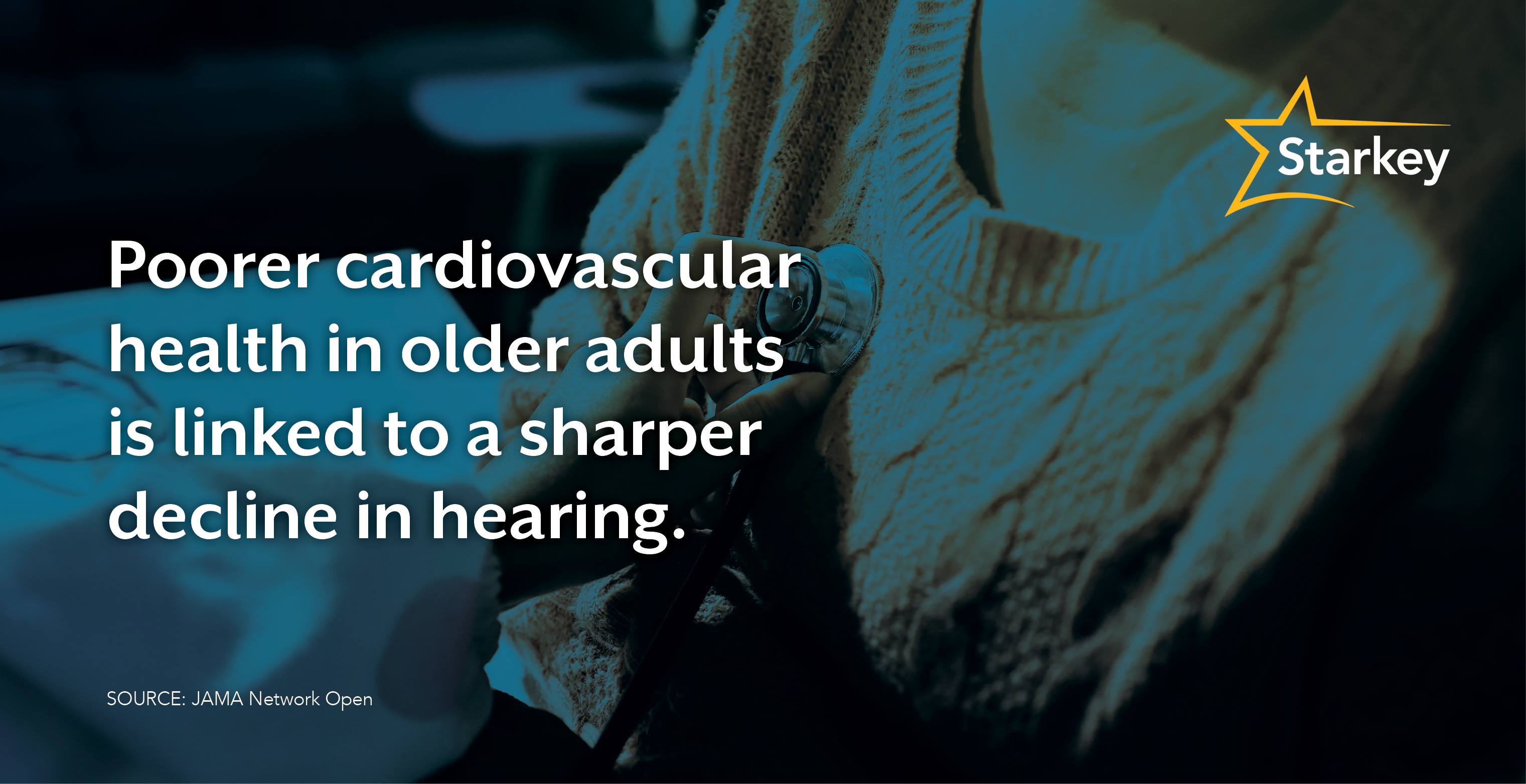
If you read this blog regularly, you’re probably aware that hearing health is interconnected with overall health. While we know that hearing loss can be an indicator of other health issues, for example, today’s hearing fact takes us on an even deeper exploration into how the state of our physical wellness not only can affect the onset of hearing loss, but also the progression.
Why would this be? And what are the risk factors involved? Let’s explore the study behind today’s hearing fact to find out.
Study examines occurrence, progression of hearing loss over 25 years
Taking into consideration hearing loss’ impact as a chronic condition for aging adults, researchers felt little was known about the incidence or the “natural history” of hearing loss. For this reason, they developed a study that would investigate the occurrence of hearing loss over 25 years and determine the factors associated with it.
Researchers studied participants from the Framington Offspring Study, a well-known research investigation that explores the incidence and prevalence of cardiovascular disease (CVD) and its risk factors; trends in CVD incidence and risk factors over time; and family patterns of CVD and associated risk factors.
The results
Researchers uncovered that over half (56.2%) of the participants who initially had normal hearing developed hearing loss during the study. On average, their hearing loss declined/progressed by about 15 decibels, though there was a lot of variation among individual participants.
Factors associated with incident hearing loss included:
- For ages 50 and under: older age, lower education, and high noise exposure
- For ages over 50: hypertension and higher stroke risk
Factors associated with progression of hearing loss included:
- For ages 50 and under: older age, lower education, female sex (however, “males compared with females had poorer hearing at baseline,” requiring “lesser change to hearing to become incident cases”)
- For ages over 50: hypertension and higher diastolic blood pressure
From these findings, the researchers surmised that poor cardiovascular health—which is increasingly more common and severe as people age—can “compound” or intensify other risk factors for hearing loss, such as noise exposure or aging itself.
As for how cardiovascular conditions directly affected the ear, the researchers reaffirmed that “cardiovascular conditions may lead to a reduced blood supply to the stria vascularis of the cochlear lateral wall, which maintains the endocochlear potential that powers sensory cells in the inner ear.”
In other words, problems with cardiovascular health may reduce the blood flow to a key part of the inner ear, which then weakens the “power source” that allows hearing cells to work properly. This can contribute to hearing loss.
The researchers concluded that their findings “corroborate hearing loss as a common public health concern that may be at least partially preventable.”

Don’t wait, prioritize health and hearing screenings
Today’s hearing fact goes to show how deeply interconnected hearing health is to overall health, which is why—as common or inconsequential as hearing loss may seem—it’s important to take it seriously. Because while you could be missing out on conversations, alert sounds, etc., you may also be missing a key indicator of another serious condition.
For these reasons and more, it’s important to see both your health and hearing providers for regular exams.
With heart disease being the leading cause of mortality in the U.S., it’s worthwhile (a given, really) to maintain routine check-ups with your physician and follow any advice and/or treatment for supporting your heart health (and obviously, anything else that affects your overall well-being).
In the meantime, the National Council on Aging offers helpful heart health tips you can browse, here (under “Keeping your heart healthy”).
Secondly, even if your hearing seems “normal” to you, it’s important to have your hearing screened every five years if you’re aged 50 to 64, and every three years after that, according to experts. While any diagnosed hearing loss may not necessarily be a “red flag” for another serious condition, treating it sooner rather than later can reduce your risk for other serious issues such as cognitive decline, depression, anxiety, falls, and mortality.
Also worth noting: Research has shown that older adults with hearing loss who wear hearing aids are less likely to have chronic illnesses such as diabetes and high blood pressure.
Find a licensed hearing care professional near you by typing your zip code in here.
Here’s to staying connected to your hearing and health providers for better hearing and living into the future.