
Welcome to Women’s Health Month—a time when we raise awareness of women’s health conditions and the importance of prioritizing women’s physical and mental well-being. If you’re reading this, you may be contemplating whether you have hearing loss, if you should get your hearing issues treated, and how it ties into Women’s Health Month to begin with.
What you’re about to discover is that your hearing health is directly connected to your overall well-being, to the point where leaving hearing loss untreated can increase your risk of other health issues as you age—a fact that has long been supported by on-going expert research.
So, what better time than Women’s Health Month to give yourself the time and space to take control of your physical, mental, and cognitive health—with the help of better hearing (and the better quality of life that goes with it)?
Let’s get started:
Prioritize checkups and screenings
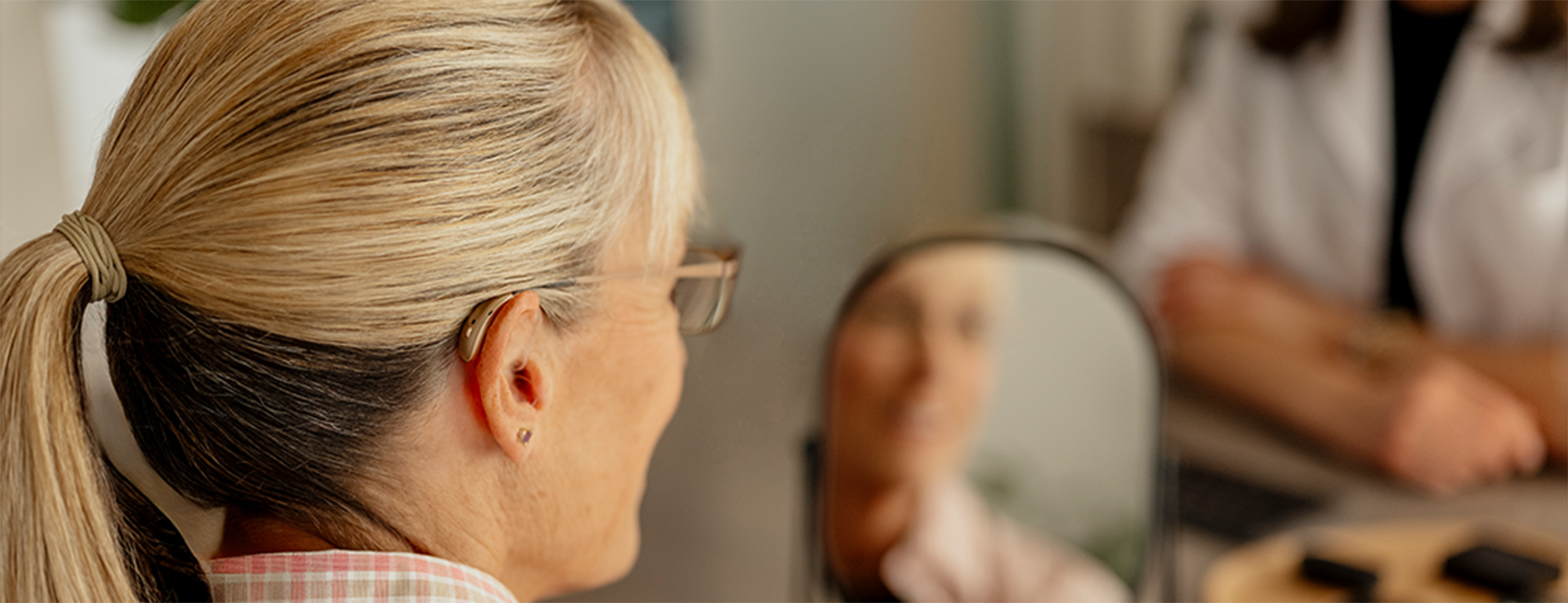
Many health problems that can happen with age are preventable, so it’s important to maintain your health and wellness through regular medical screenings and exams—including simple, pain-free hearing evaluations.
By detecting and treating any hearing loss early, you not only get to hear what you’ve been missing but also reduce your risk of dementia, depression, falls, and other conditions, according to research. Even if you don’t think you have hearing loss, experts recommend having your hearing screened every five years if you’re aged 50 to 64, and every three years after that.
With so much living to do, keeping up with your hearing and overall health can help ensure you can “be there” for everything—from your family member’s name being announced at graduation to the peaceful melody of birds on your morning walk—into the future.
Stay physically active
Move more and sit less, the Centers for Disease Control and Preventions (CDC) advises, while confirming that physical activity is one of the most important things you can do for your overall health. And one of the most important benefits (of many) is that it can reduce your odds for heart disease—the number one cause of mortality for women.
So, how does treating your hearing loss through hearing aids help you maintain an active lifestyle?
First off, hearing difficulties are associated with an increased risk of accidental injuries. So, as you are exercising and/or strength-training to help build muscle, reduce the risk of frailty, and continue activities independently—know that better hearing will be helping you maintain your spatial awareness and balance, keeping you safe while active. In fact, research has shown that treating hearing loss can reduce the risk of falling by 50%.
Moreover, the latest hearing aids by Starkey support your physical wellness further by helping you track exercise, monitor balance—even detecting if you fall and notifying contacts of your choice—simply by pairing your devices to our companion app.

Check in on your mental health
While depression and anxiety (often occurring together) aren’t a normal part of aging, did you know that women are twice as likely than men to be diagnosed with depression? It’s also important to recognize that anxiety disorders are the most widespread mental health condition in older adults.
Having untreated hearing loss can directly play into these conditions. The prevalence of depression is nearly twice as high among older adults with hearing loss than those without—which should probably come as no surprise, as research has linked hearing loss to an increased risk of loneliness and social isolation (both are risk factors for depression).
Furthermore, odds of prevalent anxiety are higher among individuals with mild hearing loss—also easy to see why, when you consider the anxiety linked to the difficulties of carrying a conversation or lipreading, for example.
Fortunately, treating hearing loss through hearing aids can help alleviate symptoms of depression and anxiety by improving your ability to hear and communicate. And because we know better hearing supports physical activity, you can use it to help reduce symptoms of these conditions.
Cedars-Sinai Clinical Psychologist Eynav E. Accortt, PhD, confirms there are “decades of research on exercise and association with good mood,” while Mayo Clinic endorses exercise as a good stress reliever.
Stay connected with others
Sustaining healthy relationships and a sense of belonging are key to supporting your overall well-being into the future.
Largely thanks to the improved ability to hear and communicate, wearing hearing aids is your biggest ally for engaging with the people you care about. You can continue participating in conversations (even in background noise), make plans, attend restaurants or family gatherings—all while maintaining your support system.
Why is this so important? Because loneliness and isolation are not only associated with depression and anxiety, but also cognitive decline. In fact, even adults who have moderate hearing loss are three times more likely to develop dementia than their peers who don’t.
Better hearing can also strengthen your brain health—helping you think better, learn better, remember better, and reason better than before. And it makes sense: By getting your hearing loss treated, your brain no longer has to spend extra energy trying to process what it’s hearing and therefore have less energy to spend on thinking, memory, and other cognitive tasks.
By maintaining cognitive health through your best hearing, you can continue to learn new skills, manage your emotions, and solve problems, as you age.

Take care of yourself—by looking after your hearing health
If there is anything for you to take away from this blog, it’s to give yourself permission to look after yourself: In honor of Women’s Health Month—and Mother’s Day this weekend—use this time to check in on the four categories above, knowing that your hearing health not only supports all of them, but also your overall joy.
Next, make any changes that will make you happier and healthier. It’s the greatest gift you can give yourself and the people around you.
Because when you’re happy and healthy, you can celebrate every moment to the fullest.
Schedule an appointment with a hearing care professional today.